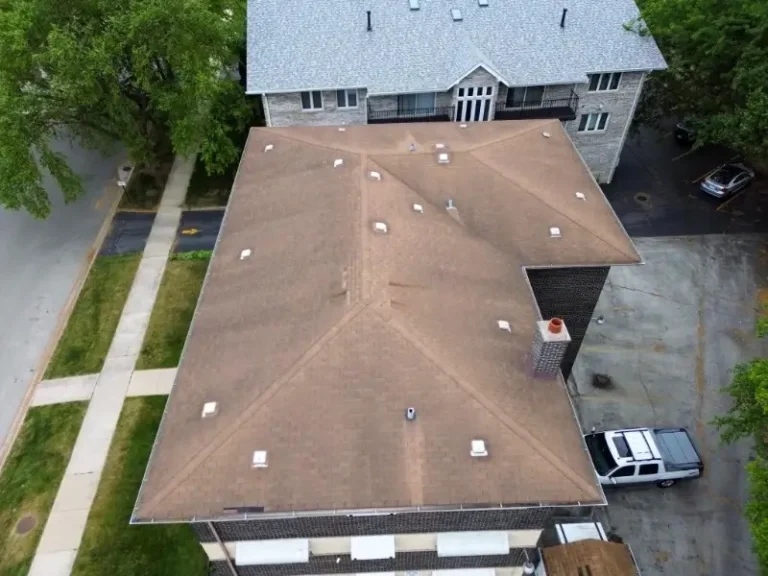
How to Tell If Your Roof Needs a Repair or a Full Replacement
A roof problem does not automatically mean you need a completely new roof. Small, localized damage can often be repaired, while widespread deterioration, structural problems, or repeated failures may make replacement the better option. The hard part is knowing which situation you are actually in.
Most homeowners struggle with this because visible damage does not always tell the whole story. A missing shingle or a water stain on the ceiling can look alarming. However, it does not say much on its own about how serious the underlying problem is. What actually matters is a combination of things. That includes how much of the roof is affected, how old the roofing system is, and whether the decking underneath is still sound. It also includes whether this is the first repair or the fifth one in the same area.
That combination is hard to judge from the ground. That is part of why a professional roof inspection is usually the most reliable way to get a real answer. This article walks through the signs your roof needs repair and the signs you need a new roof. It also covers the gray areas in between, where the roof’s actual condition, not just its age or appearance, ends up being the deciding factor. The goal is helping you think through roof repair or replacement with a clearer picture of what is actually going on.
Not sure how serious the damage is? Schedule a roof inspection in Conroe, TX to have the roof’s condition evaluated before deciding between repair and replacement.
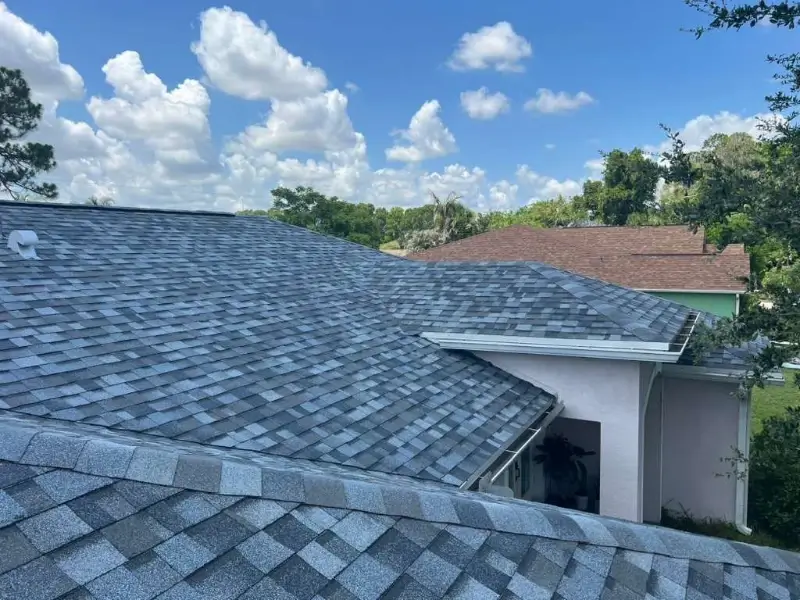
Quick answer: How do I know if my roof needs repair or replacement?
A roof may be repairable when damage is localized and the rest of the roofing system remains in good condition. Replacement may be more appropriate when deterioration is widespread, leaks repeatedly return, or the roof has significant underlying or structural damage. A professional inspection can help determine which option fits the roof’s actual condition.
Roof Repair or Replacement: What’s the Difference?
Roof repair means fixing a specific, identifiable problem. That could be a section of damaged shingles, a leak with a clear source, or a piece of flashing that has come loose. Replacement means removing and rebuilding some or all of the roofing system. That becomes necessary when the existing materials are no longer performing as they should. It also becomes necessary when so much of the roof needs attention that repairing it piece by piece stops making practical sense.
When a Roof Repair Makes Sense
Repair is usually the right call when the problem is contained. A handful of cracked or missing asphalt shingles can typically be addressed without touching the rest of the roofing system. So can a small leak with an identifiable source. The same is usually true of a section of damaged roof flashing around a chimney or vent. The same is usually true of a failing pipe boot. The same is often true of storm and hail damage limited to one area of the roof. In these cases, the surrounding shingles, decking, and flashing are usually still doing their job.
When Roof Replacement Makes More Sense
Replacement tends to become the more practical option when the roof is showing widespread deterioration rather than a single, contained issue. That can mean extensive shingle failure across multiple sections, or decking damage severe enough to affect more than a small area. It can also mean leaks that keep returning in the same or different spots, or major storm damage that touches large portions of the roof.
Age is one factor in that picture, but the actual condition of the roofing system matters too. A roof at a certain age is not automatically due for replacement. It depends on how that roof has held up, how it was maintained, and what an inspection actually finds.
9 Signs Your Roof May Only Need a Repair
These are situations where a repair is often enough to solve the problem, though a quick inspection is still the best way to confirm it.
1. Damage Is Limited to a Small Area
The affected area might be confined to one section of the roof, such as one slope, one valley, or one spot near a vent. If so, that is a good sign. It usually means the rest of the roofing system is unaffected. A targeted repair can usually resolve it.
2. Only a Few Shingles Are Missing or Damaged
Cracked shingles, lifted shingles, or wind-damaged shingles scattered in a small area can usually be replaced individually without disturbing the surrounding roof. Loose shingles or curled shingles in a similarly small area often fall into the same category. This is different from shingles failing across large sections, which points toward a bigger underlying issue.
3. The Leak Has a Localized Source
A leak does not necessarily mean the entire roof has failed. Many leaks trace back to one specific point, such as a seam, a penetration, or a small gap in flashing. Once that source is repaired, the leak stops. This is a case where a professional roof inspection helps confirm the source before repairs begin.
4. Flashing Is Damaged
Flashing around chimneys, walls, valleys, and vents is one of the most common sources of roof leaks, and it is often repairable on its own. Damaged chimney flashing, wall flashing, valley flashing, or vent flashing can typically be replaced without affecting the surrounding shingles.
5. A Pipe Boot or Roof Penetration Is Failing
Pipe boots and other roof penetrations wear out over time, particularly the rubber or plastic collar that seals around the pipe. A failing pipe boot is a common, localized repair rather than a sign of a larger roofing problem.
6. Hail or Wind Damage Is Limited
Storms do not always damage a roof evenly. If hail impact or wind damage is confined to a smaller section rather than spread across the roof, repairing that section is often sufficient.
7. The Roof Decking Is Still Sound
If the decking beneath the affected shingles is solid, dry, and free of rot, that is a strong sign the roof’s structure is intact. In that case, a repair can address the visible problem without needing to rebuild what is underneath.
8. Most of the Roofing System Is in Good Condition
When the majority of the shingles, flashing, and decking are performing well, and only one area is showing a problem, that is a good sign. Repairing that one area is usually the more practical route.
9. Previous Repairs Have Solved Problems Successfully
Past repairs on this roof may have held up and resolved the issues they addressed. If so, that is a reasonable sign the roofing system is still fundamentally sound. This is not a guarantee that the next issue will also be a simple repair. It depends on what is actually causing the new problem. That said, a track record of successful, isolated repairs is a positive indicator.
Signs Your Roof May Need Full Replacement
These situations tend to shift the conversation from a repair to a broader look at whether replacement is the more practical path.
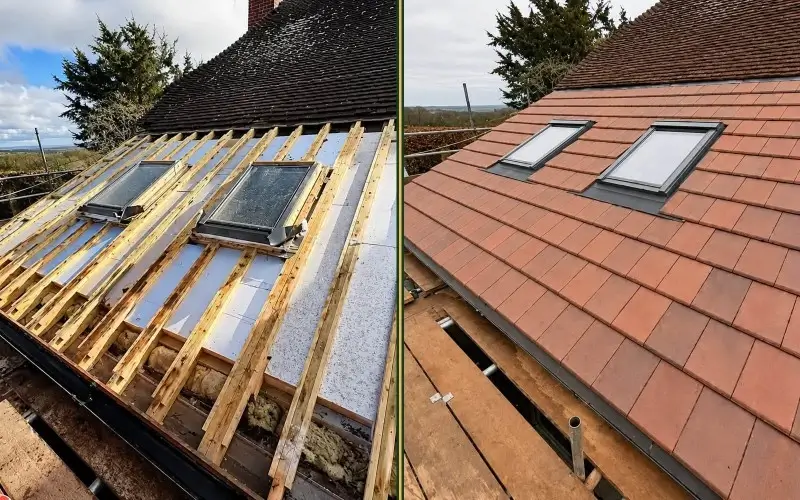
1. Damage Is Widespread
There is a meaningful difference between damage confined to one section of the roof and deterioration spread across multiple areas. Widespread damage is harder to resolve with a series of individual repairs. That includes failing shingles on more than one slope, multiple leak points, or flashing issues in several places.
2. You Have Repeated or Recurring Leaks
One leak that gets repaired and stays fixed is fairly normal over the life of a roof. The same area leaking again, or new leaks showing up in different spots, can point to a larger underlying problem. That is different from a series of unrelated small issues.
3. Shingles Are Failing Across Large Areas
Curling, cracking, widespread granule loss, brittleness, and missing shingles spread across large sections of the roof are signs worth paying attention to. They usually mean the shingles themselves are reaching the end of their useful life, rather than isolated damage that can be patched.
4. The Roof Decking Is Sagging or Damaged
This is one of the more significant distinctions. Sagging areas, soft spots underfoot, rot, or decking that has been exposed to prolonged moisture all point to structural issues. These go beneath the shingles, not just a surface-level problem. These conditions warrant a professional inspection rather than a guess from the ground or the attic.
5. Your Roof Has Had Multiple Significant Repairs
There is no fixed number of repairs that automatically means it is time to replace a roof. What matters more is the pattern. Several repairs over time can be worth watching, especially if they are addressing similar or related problems. That pattern may be a sign that the roofing system is approaching the point where continued patching is less practical than a broader fix.
6. Storm Damage Affects Multiple Areas
Wind damage, hail impact, missing shingles, and damaged flashing spread across more than one part of the roof after a storm are worth flagging. They often mean the roof needs a fuller assessment rather than a single targeted repair. Storm damage roof repair can address some of this. However, the extent of the damage is what determines whether repair or replacement is the more appropriate response.
7. Hail Has Caused Widespread Impact Damage
Hail impact that is spread across most or all of the roof, rather than concentrated in one area, is worth paying attention to. It is one of the clearer signs that replacement may be worth considering. Hail damage roof repair can resolve isolated impact areas, but widespread bruising or cracking across the shingles is a different situation.
How Roof Age Affects the Repair-or-Replace Decision
Roof age comes up in almost every repair-or-replace conversation, and it is a legitimate factor, but it is not an automatic trigger on its own. A roof’s remaining service life depends on more than just how many years have passed since installation.
Installation quality, ongoing maintenance, weather exposure, storm history, attic ventilation, and the condition of the materials all affect how well a roof has aged. Two roofs installed the same year, on similar homes, can be in very different condition depending on those factors. Previous repairs matter too. A roof with a handful of well-maintained, successful repairs may still have plenty of useful life left. Meanwhile, a younger roof that has seen repeated storm damage or poor ventilation may be showing its age faster than expected.
The practical takeaway is this: roof age is worth mentioning to whoever inspects your roof. It should not, however, be the only number that decides repair versus replacement.
Why Previous Roof Repairs Matter
One isolated repair on a roof usually is not something to be concerned about. Roofs go through normal wear, and a single fix for a specific issue is a routine part of ownership.
Repeated repairs are a different story worth paying attention to. They can indicate an aging roofing system, or a recurring leak source that has not been fully resolved. They can also point to widespread deterioration showing up gradually rather than all at once. They can also point to an underlying flashing issue, or a decking or moisture problem that keeps causing new symptoms. That does not mean multiple repairs always mean replacement. The pattern and the actual cause of the repairs matter more than the count. A roof that has had three unrelated, minor repairs over ten years is in a very different position. That is not the same as a roof with three repairs in the same spot over two years.
Roof Decking: The Difference Homeowners Often Can’t See
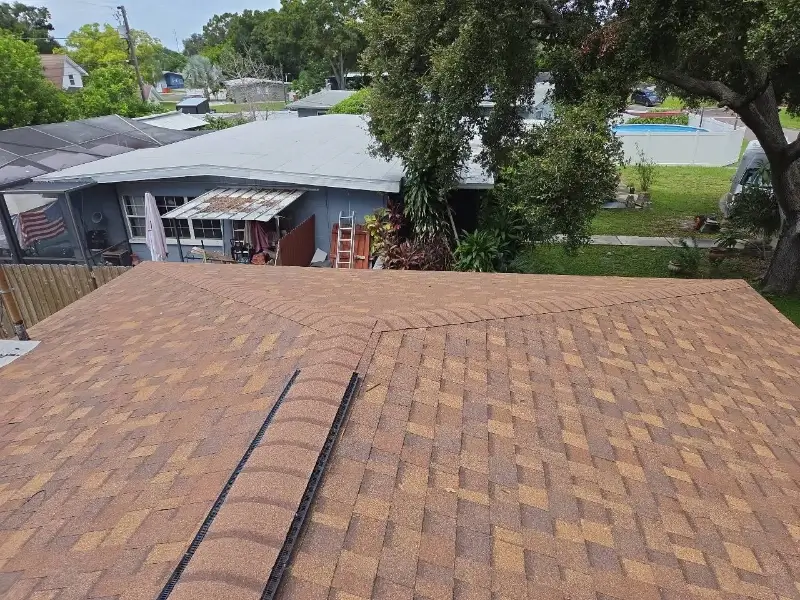
Roof decking is the solid layer, usually plywood or OSB, that sits underneath the roofing underlayment and shingles and gives the roof its structure. It is what the rest of the roofing system is actually attached to, and it is almost entirely hidden from view.
That is exactly why decking problems are easy to miss. Water damage, rot, mold growth, soft decking, and a sagging roof deck can all develop beneath shingles. That can happen even when the shingles still look fine from the ground or from a ladder. Exposed underlayment or granule loss on the surface can sometimes be the only visible clue that moisture intrusion has already reached the decking below. Shingle appearance alone is not always enough to tell you what is happening underneath. A roof can look reasonably intact on the surface while the decking underneath has been compromised by a slow, long-running leak.
This is one of the main reasons an inspection matters more than a visual check. If you are seeing water stains, ceiling stains, recurring leaks, or visible roof deterioration, that is worth acting on. Request a roof inspection in Conroe, TX before deciding whether repair or replacement is the right next step.
Can a Roof Leak Be Repaired Without Replacing the Entire Roof?
Yes, in many cases. A leak by itself does not necessarily mean the whole roof needs to be replaced. It depends on what is causing it and how far the damage has spread. If you are dealing with an active leak right now rather than trying to decide between repair and replacement, our emergency roof repair team can respond the same day to stop the water and protect your home.
Repair is often appropriate when the leak comes from a localized flashing failure, a small number of damaged shingles, or a failing pipe boot. The same is true of storm damage confined to one area. In these situations, roof repair that targets the actual source usually resolves the problem.
The leak is more likely to point toward a larger issue when it keeps coming back after being repaired. It is also more likely when there is more than one leak location. The same is true when the decking underneath has been damaged by prolonged moisture. It is also true when the leak followed extensive storm damage rather than a single, isolated failure. In those cases, the leak may be one visible symptom of a broader problem worth having fully assessed.
Repair vs Replacement: A Simple Homeowner Checklist
This checklist is a starting point for thinking through roof condition, not a substitute for a professional roof damage assessment.
What a Professional Roof Inspection Should Check
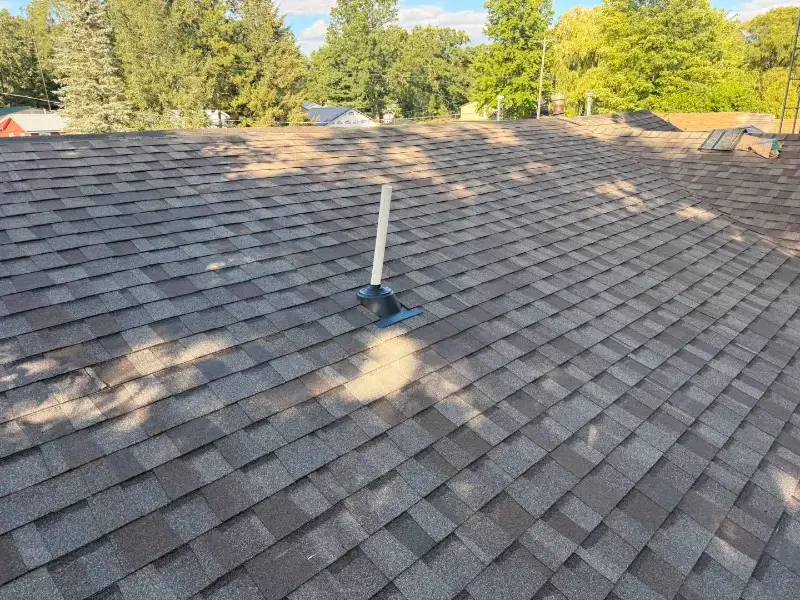
A thorough roof inspection typically looks at the shingles across the entire roof, not just the obviously damaged area. That includes flashing at chimneys, walls, valleys, and roof vents, along with the drip edge, eaves, and gutters. It also includes roof penetrations like pipe boots, valleys where water concentrates, the ridge cap, and attic ventilation. It also covers visible underlayment where it can be seen, along with the decking. And it looks at signs of moisture or past water intrusion, along with storm or hail damage. It also looks at the condition of any areas that have been repaired before.
The purpose is not simply to recommend replacement. A proper inspection should help determine whether the existing roofing system can reasonably be repaired or whether replacement is the more practical option. It should also be able to explain why, based on what was actually found. The International Association of Certified Home Inspectors publishes general background on what a thorough home and roof inspection typically involves.
How Much Does Roof Repair vs Replacement Cost?
Roof repair and replacement costs both depend on enough variables that a single number rarely tells the full story. Because of that, pricing is not something we publish without seeing the actual roof.
Repair cost generally depends on the type of damage, how many areas are affected, and the materials involved. It also depends on how accessible the damaged area is, whether flashing needs to be replaced, and whether any decking underneath needs attention.
Replacement cost depends on the size of the roof, the roofing material chosen, and the complexity of the roof’s shape and pitch. It also depends on whether a full tear-off is needed, the condition of the decking, ventilation requirements, and labor. Permits may also apply depending on the scope of the work.
Want to understand whether your roof actually needs replacement? Start with a professional roof inspection in Conroe, TX.
What Should You Do If You Aren’t Sure?
Don’t Assume the Entire Roof Needs Replacing
A single damaged area or one leak doesn’t automatically mean a full roof replacement. Start by identifying what is actually wrong.
Document Visible Damage
Take photos of missing shingles, ceiling stains, damaged flashing, and any storm damage you can see safely.
Get the Roof Evaluated
A professional inspection is the most reliable way to determine whether repair or replacement fits your roof’s actual condition.
From there, roof repair or roof replacement in Conroe, TX can move forward based on what the inspection actually finds.
Repair or Replace? The Bottom Line
Knowing when to repair a roof versus when to replace a roof comes down to weighing a few consistent factors together. It is not about reacting to any single sign on its own. Repair is generally worth considering when damage is localized, and the rest of the roofing system is in good condition. It is also worth considering when the decking remains sound and the problem has a specific, repairable cause.
Replacement may make more sense when deterioration is widespread, leaks keep returning, or roofing materials are failing across large areas. The same is true when the decking has significant damage, storm damage is extensive, or continued repairs are becoming impractical.
The safest way to make the decision is to evaluate the whole roofing system, not just the visible damage.
Not Sure Whether Your Roof Needs Repair or Replacement?
You don’t have to guess whether a damaged roof needs a patch or a complete replacement. A professional inspection can help identify the source of the problem, assess the condition of the roofing system, and determine the most appropriate next step.
Frequently Asked Questions
Is it cheaper to repair a roof or replace it?
In most cases, repairing a specific, localized problem costs less than a full replacement, since replacement involves removing and rebuilding the entire roofing system. The actual cost depends on the extent of the damage and what a repair versus a replacement would each require.
How do I know if my roof needs to be replaced?
Widespread shingle failure, recurring leaks, significant decking damage, and extensive storm damage are all signs that point toward replacement rather than repair. A professional inspection is the most reliable way to confirm which situation you are actually in.
Can a 20-year-old roof be repaired?
Often, yes. Age alone does not rule out a repair. What matters more is the roof’s actual condition: whether the decking is sound, how much of the roofing system is affected, and whether the damage is localized or widespread.
Does one roof leak mean I need a new roof?
Not necessarily. Many leaks come from a single, identifiable source, like damaged flashing or a failing pipe boot, and can be repaired without replacing the roof. Recurring leaks or leaks tied to widespread decking damage are a different situation.
How many times can a roof be repaired?
There is no set number. What matters more is the pattern behind the repairs. Isolated, unrelated fixes over many years are different from repeated repairs addressing the same underlying problem.
Is storm damage a reason to replace a roof?
It can be, depending on how widespread the damage is. Storm damage confined to one section of the roof is often repairable, while damage spread across multiple areas may point toward replacement.
Should I get a roof inspection before replacing my roof?
Yes. An inspection confirms what is actually causing the problem and whether repair is a realistic option before committing to a full replacement.