
Roof Replacement Services in Conroe, TX
Roof Replacement Conroe TX
A full roof replacement in Conroe, TX is a significant decision, and it isn’t always the right one. Not every damaged roof needs a complete tear-off. Many issues affecting individual shingles, flashing, or a limited section of the roof can still be handled through targeted roof repair in Conroe. But when a roof shows widespread deterioration, recurring leaks, or has simply reached the end of its service life, replacing the entire roof system, from decking and underlayment to flashing and the roofing material itself, becomes the more practical path. We walk Conroe homeowners and property owners through that decision honestly, based on the actual condition of the roof.
Licensed & Insured • Free Roof Evaluations • Serving Conroe, Willis, Montgomery & The Woodlands
When Does Roof Replacement Make More Sense Than Repair?
When Roof Repair May Still Make Sense
A lot of roofs that look concerning from the ground are actually fine once you get a closer look. Localized damage, an isolated roof leak around a single penetration, a run of shingles lifted by wind, or one bad section of flashing does not mean the whole roof is failing. If the rest of the roof is holding up well, decking is solid, and the roof condition otherwise looks reasonable, a targeted repair is usually the right call. That is the approach we take on most roof repair calls, and it is also how we handle most roof leak repair visits — find the actual source, fix that section, and leave the rest of the roof alone. If your roof is actively leaking right now, our emergency roof repair team can stabilize it today while you decide on the right long-term fix.
When Full Roof Replacement May Make More Sense
Replacement starts to make more sense once the problems stop being isolated. Widespread granule loss, shingles failing across multiple slopes, repeated repair calls to the same general areas, severe storm damage spread across the roof, or an aging roofing system nearing the end of its expected life all point toward a broader roof-system issue rather than one bad spot. At that stage, patching individual areas gets impractical — the underlying decking and underlayment are usually showing their age everywhere, not just where the current leak is, and a full roof replacement addresses the roof as one system instead of chasing problems one at a time.
The only way to know which side of that line your roof falls on is to actually look at it. A roof inspection in Conroe gives you a clear picture of roof condition and the real extent of any damage before you decide anything — we will not recommend a full replacement without one.
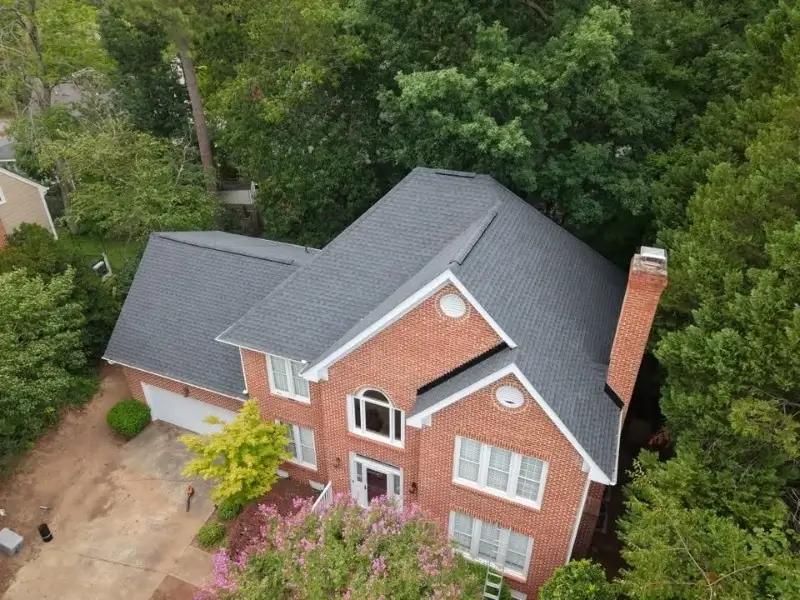
Residential Roof Replacement in Conroe
Most single-family homes in and around Conroe are roofed with asphalt or architectural shingles, and that is where most of our Conroe roof replacement work happens. A residential replacement means removing the old roof covering down to the decking, checking the deck itself, and rebuilding the roof system from the ground up: new underlayment, drip edge, valleys, pipe boots and flashing at every penetration, ridge vent and intake ventilation, and finally the shingles or metal panels you have chosen. Roof slope, valleys, and the number of penetrations (vents, skylights, chimneys) all affect how the job is sequenced.
We also treat the property itself as part of the job — tarping landscaping, protecting driveways and AC units, and doing a full cleanup and nail sweep when the roof is done. If what you actually need is a localized fix rather than a full tear-off, our residential roof repair team can usually tell you that on the first visit.
Commercial Roof Replacement in Conroe
Commercial roof replacement usually comes with a different set of concerns than a house. Business owners and property managers care about roof access, project scheduling, and keeping day-to-day operations running while the work is happening. Before recommending a full replacement, we look at the roof surface area, drainage, how many roof penetrations are involved (HVAC curbs, vents, conduit), and whether the existing roof condition is actually a repair situation or a full-scope project. If the issue turns out to be limited in scope, our commercial roof repair team may be able to resolve it without a full replacement. Repair vs replacement on a commercial building really comes down to how much of the roof surface is affected and what the remaining service life looks like.
Flat and Low-Slope Roof Replacement
Many commercial buildings in the area have flat or low-slope roofs, which are a different system entirely from a pitched shingle roof. Low-slope roofing depends heavily on proper drainage and correctly sealed penetrations — standing water and poorly sealed roof penetrations are the two biggest causes of failure on these systems. Depending on the building and the scope of work, that can mean membrane roofing such as TPO or EPDM, or in some cases metal roofing. We will walk through what fits your building and your budget rather than pushing one system.
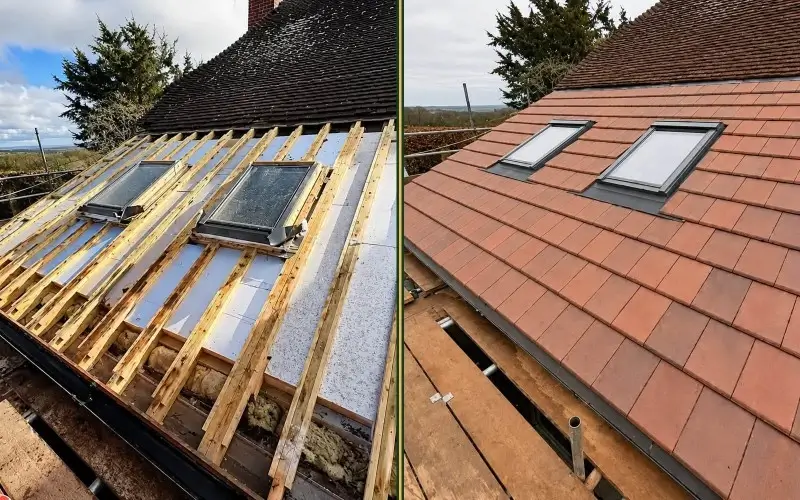
What Affects Roof Replacement Cost in Conroe?
Every roof is different, so we are not going to hand you a number that does not apply to your property. What we can do is walk through the factors that actually move roof replacement cost in Conroe up or down, so an estimate makes sense once you see one.
Roof Size and Roofing Squares
Roofers measure roofs in roofing squares (100 square feet of roof surface), and roof surface area is not the same as your home’s square footage — roof pitch, overhangs, and dormers all add surface area. More squares means more material and more labor.
Roofing Material and System Quality
Asphalt, architectural shingles, and metal roofing all carry different material costs, and so do the underlayment, flashing, and ventilation components installed with them. Two estimates for the same house are not automatically comparable if they are not pricing the same roof system.
Number of Existing Roof Layers
A roof with one layer of shingles tears off faster and produces less debris than one with multiple layers stacked on top of each other. More layers means more labor and a larger volume of material to haul away.
Roof Pitch, Height and Accessibility
A steep roof or a two-story home takes longer to work safely and often needs extra equipment to access. Roofs that are harder to reach or walk simply take more time to complete.
Roof Decking Condition
You cannot always see the deck condition until the old roofing material comes off. Damaged or rotted OSB decking sometimes only becomes visible during tear-off, and localized deck replacement adds material and labor that a pre-tear-off estimate could not account for.
Intake and Exhaust Ventilation
Proper attic airflow needs both intake and exhaust ventilation working together. A replacement is a natural point to assess ridge vent and intake ventilation and correct anything that is undersized or blocked.
Roof Penetrations and Chimney Flashing
Every pipe boot, roof jack, and chimney is a place water can get in if flashing is not installed correctly. Homes with more penetrations need more flashing work, which adds time to the job.
Tear-Off, Disposal and Cleanup
Removing the old roofing material, loading a dumpster, and hauling away debris is real labor, not an afterthought. Final cleanup and a magnetic nail sweep should be part of the scope, not billed as an extra later. Understanding roof replacement cost in Conroe really comes down to these factors more than any single number.
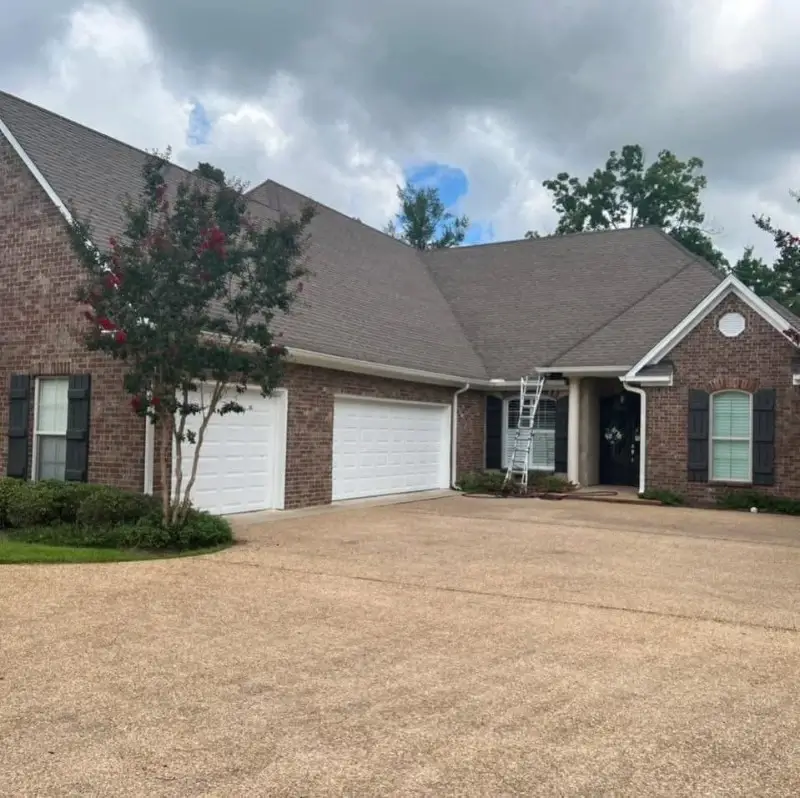
Roofing Materials for Roof Replacement
Asphalt Shingles
Asphalt shingles are the most common roofing material on homes in this area, and for good reason — they are a proven, cost-effective system when installed with proper drip edge, starter strip, and underlayment underneath them.
Architectural Shingles
Architectural shingles are a heavier, dimensional upgrade from basic three-tab shingles, with a thicker profile and a longer expected lifespan. They cost more than three-tab shingles but hold up better against wind, which matters here.
Metal Roofing
Metal roofing is a solid option for both residential and commercial properties, particularly where long-term durability and heat reflectivity matter. It is not automatically the right choice for every home — roof design, budget, and personal preference all factor into whether it makes sense for your property.
Flat and Low-Slope Roofing
For low-slope sections and flat commercial roofs, membrane systems like TPO or EPDM are the common choice, with drainage design playing a major role in how long the system lasts.
What Happens During a Full Roof Replacement?
From property protection to final cleanup, here is how a full roof replacement actually happens on site.
Prepare and Protect the Property
We set up ladders and roof access, tarp landscaping, move vulnerable items, and mark off work zones before anything comes off the roof.
Tear Off Existing Roofing
Old shingles and underlayment come off, including multiple layers where present, with debris moved to a dumpster for disposal as we go.
Expose and Check the Roof Deck
With the deck exposed, we remove old nails and check for moisture damage, soft spots, or deteriorated OSB decking hidden under the old roofing.
Address Damaged Decking
Any localized damaged or rotted decking sections are replaced before new underlayment goes down. Not every replacement needs new decking, only the sections that need it.
Install Water-Management Components
Drip edge, ice and water barrier at vulnerable areas, and synthetic underlayment go on next, with extra attention at valleys and roof transitions.
Install Starter Strips and Roofing Material
Starter strips go down first for a clean edge, then the selected roof covering is installed in sequence across the roof.
Flashing and Roof Penetrations
Pipe boots, roof jacks, and flashing around chimneys and valleys are installed or replaced so every roof penetration is properly sealed.
Ridge and Ventilation Work
Ridge vent and other intake or exhaust ventilation components are installed along the hip and ridge areas where applicable.
Final Review and Cleanup
We walk the finished roof, remove debris, run a magnetic sweep for loose nails, and clean up the work area and landscaping before we leave.
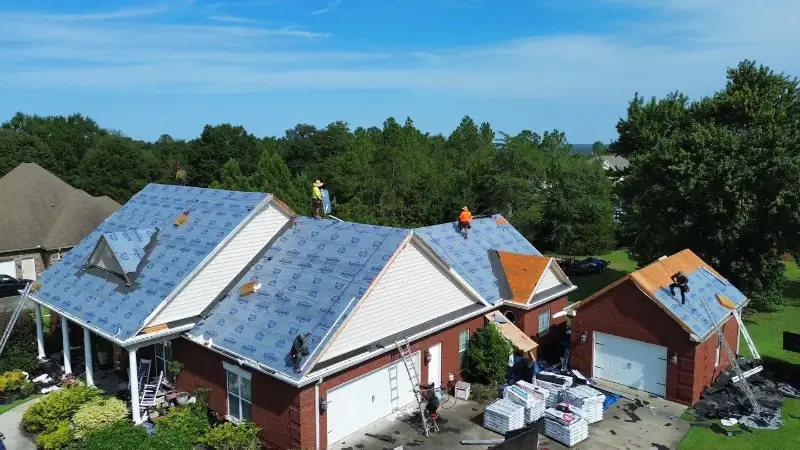
Roof Replacement After Storm, Wind or Hail Damage
Storm damage does not automatically mean the entire roof needs to be replaced. After a bad storm we typically see a mix of missing or lifted shingles, granule loss from hail impacts, bent or damaged flashing, and in some cases water intrusion where wind drove rain up under the shingle line. Whether that adds up to a repair or a full storm damage roof repair or a replacement comes down to how widespread the damage is versus how localized it is, and what the rest of the roof’s condition looks like underneath it.
Hail is its own category — impacts can look minor from the ground but cause real granule loss and mat damage on close inspection. If you have had recent hail in the area, a proper hail damage roof repair inspection is the right first step before deciding anything about replacement.
Roof Replacement and Insurance Considerations
If your situation involves an insurance claim, documentation matters. Photos of the damage, a clear record of roof condition, and inspection findings all help support your claim when an adjuster comes out. What we can do is document what we find and provide a written replacement estimate for your records. What we cannot do is tell you what your policy covers or guarantee how a claim will be decided — that determination belongs to your insurer and adjuster, not your roofing contractor. If you plan to file a claim, it is worth reviewing your policy and roof insurance claim guidance from your insurance provider alongside our inspection findings.
How Long Does Roof Replacement Take?
There is no universal timeline that applies to every roof. Duration depends on roof size and roofing squares, pitch, building height, how accessible the roof is, the material being installed, weather during the project, how many existing layers need to come off, decking condition once it is exposed, and how complex the roof is — valleys, transitions, and dormers all add time. A straightforward residential job runs differently than a larger commercial project with more roof surface area to cover, and we will give you a realistic timeframe for your specific roof once we have actually looked at it.
What Should You Compare in a Roof Replacement Estimate?
Two estimates with two very different numbers on them are not automatically comparing the same job. Look at the roofing material and the exact roofing system specified, whether tear-off and disposal of existing layers is included, how decking issues are handled if they show up, and what underlayment, flashing, drip edge, and penetration work is covered. Ventilation, cleanup, labor, and the actual project timeline should all be spelled out, along with what happens if conditions change once tear-off exposes the deck.
Do not compare estimates by price alone. Compare what materials, components, and work are actually included in the written scope.
Roof Replacement Considerations for Conroe Properties
Roofs in Conroe and across Montgomery County deal with a specific combination of conditions: long stretches of intense Texas heat and direct sun exposure, heavy seasonal rainfall, and periodic strong storms that bring wind and hail. That combination puts real stress on shingles, flashing, and attic ventilation over time. Proper attic ventilation and roof drainage matter more here than in milder climates, since trapped heat and moisture both accelerate wear from the underside of the roof. Material choice, roof slope, and how the roof is designed for your specific property all play into how well a replacement holds up against what this area’s weather actually does to a roof year over year.
Roof Replacement FAQs
How much does roof replacement cost in Conroe, TX?
There is no set number we can quote without seeing the roof. Cost depends on roof size and roofing squares, pitch, the material you choose, how many existing layers need to come off, decking condition, ventilation, and how many roof penetrations need flashing, along with tear-off and labor. A free on-site evaluation is the only way to get an accurate figure for a new roof in Conroe, TX.
Is it better to repair or replace a roof?
It depends on the extent of the damage. Localized damage, such as a single leak or a section of damaged shingles, can often still be repaired. Widespread deterioration, repeated repair calls, or extensive storm damage tend to make replacement the more practical option. See our roof repair or replacement guide for more on how to tell which one applies to your roof. We can walk you through roof repair versus replacement once we have looked at your roof.
How long does a full roof replacement take?
Timeline depends on roof size, pitch, weather during the project, the material being installed, the number of existing layers, how accessible the roof is, and any underlying conditions found once tear-off begins. We give a realistic estimate for your specific roof, not a generic number.
Can hail damage require full roof replacement?
Yes, in cases where hail impacts are extensive across the roof, replacement can be the appropriate option. But hail damage does not automatically mean the whole roof needs to go. A proper hail damage roof repair inspection is the right first step to find out how widespread the damage actually is.
Will insurance cover an older roof in Texas?
That depends on your specific policy terms, the cause of the damage, the roof age and condition, and your insurer assessment. We can document roof condition and damage for your claim, but coverage decisions are made by your insurance company, not by us.
Do I need to be home during roof replacement?
Not necessarily, though it depends on how you would like to handle access and communication during the project. We can go over the arrangement that works best for your schedule before work begins.
What happens to my yard and landscaping during roof replacement?
We tarp landscaping and vulnerable areas before work starts, manage debris as it comes off the roof, and do a full cleanup afterward, including a magnetic sweep for stray nails around the property.
How many layers of shingles can be on a roof?
Existing layers affect the scope of a tear-off, since more layers means more material to remove and more labor. The number of layers allowed on a given roof can depend on local code requirements, so this is worth confirming for your specific property rather than assuming a general rule applies.
What areas do you serve for roof replacement near Conroe, TX?
We provide roof replacement throughout Conroe, TX, including ZIP codes 77301, 77302, 77303, 77304, 77305, 77306, 77384, and 77385, along with nearby communities such as The Woodlands, Willis, Montgomery, Magnolia, and Shenandoah.
Need Help Deciding Whether to Repair or Replace Your Roof?
The right next step depends on the actual condition of your roof. Localized damage may still be repairable through our roof repair services, while widespread deterioration usually points toward replacement. Either way, we will explain the project scope clearly before any work begins.