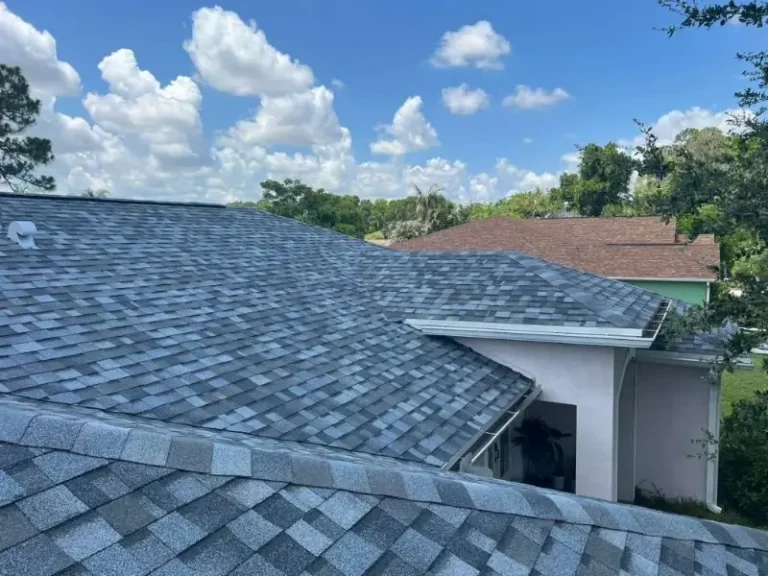
How to Stop a Roof Leak Temporarily Until a Professional Can Repair It
A roof leak rarely stays small if it is ignored. What starts as a faint stain on the ceiling can turn into soaked insulation or damaged drywall. In some cases, it becomes a bigger repair than the original problem ever needed to be. Most homeowners in this situation want to know how to stop a roof leak temporarily until a professional can get out to look at it. The steps below are meant to help you get through the next few hours safely and limit the damage. They are not a substitute for having the actual source of the leak found and repaired.
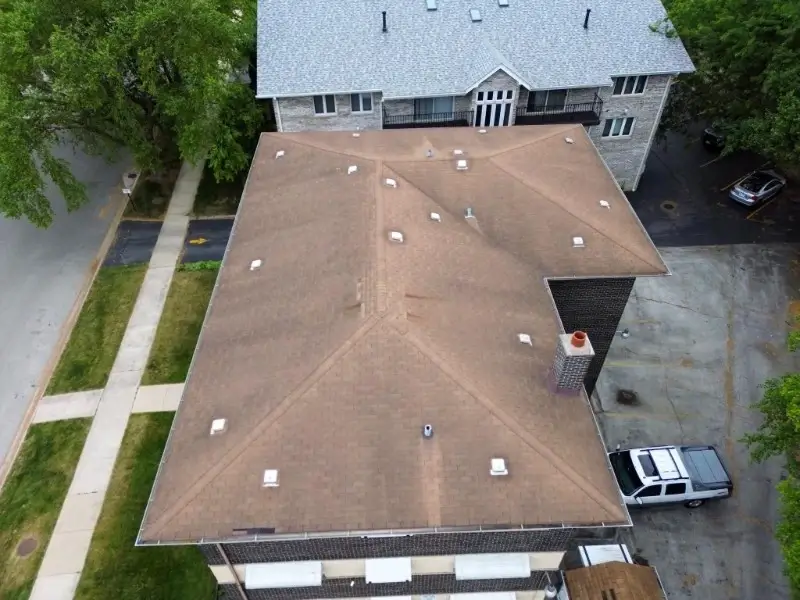
How to Stop a Roof Leak Temporarily: Find the Source First
Before you can do anything about a roof leak, you need a rough idea of where the water is actually coming from. That said, it is not always as obvious as it looks. A water stain on the ceiling or a steady drip usually shows up under where the roof deck first got wet. However, water does not always travel straight down. It can run along a rafter or follow a seam in the decking. Sometimes it traces along a pipe before it finally drips through the ceiling. That means the wet spot inside your home and the actual entry point on the roof are often several feet apart.
Start from the ground. Walk around the outside of the house and look up at the roof for anything obviously out of place. Watch for lifted or missing shingles, a section of flashing that looks bent or pulled loose, or debris sitting where it should not be. None of this requires getting on the roof.
If you have safe, dry attic access, a flashlight check can help. Look for damp insulation, dark staining on the underside of the decking, or moisture tracking along a rafter. Move carefully and only if the attic floor is solid and dry — this is a quick visual check, not an inspection.
What to Do Immediately When Your Roof Is Leaking
Once you know water is coming in, the priority shifts to protecting what is inside your home while you sort out next steps. In a leaking roof emergency, the first hour matters more than the fix itself. How you respond to an active roof leak can be the difference between a wet ceiling and a much larger repair.
Move Furniture and Protect Your Belongings
Water damage spreads faster than most people expect. Move furniture, electronics, and anything else you can out from under the affected area. A plastic sheet or tarp over anything too large to move can buy some time.
Place Buckets or Containers Under the Drip
A bucket, trash can, or even a large bowl under an active drip keeps water off the floor. It also gives you a rough sense of how much is coming through. Empty it regularly so it does not overflow.
Watch for Ceiling Bulges and Electrical Hazards
A ceiling that is bulging or sagging means water has pooled above it, and that is not something to handle casually. Stay away from the area, and never touch a ceiling fixture, outlet, or switch that is wet or near an active leak. Water and electricity are a serious combination, and this is one situation where waiting for a professional is the safer choice.
If the leak is active and heavy, or you are dealing with more than one leak point at once, that is worth noting. It is usually an emergency roof leak situation. Emergency roof repair becomes the more practical option rather than continuing to manage it room by room.
How to Temporarily Cover a Roof Leak
Using a Roof Tarp as Temporary Protection
A tarp works by creating a physical barrier over the damaged section of roof. That barrier directs rain away from the opening instead of letting it keep soaking through. Done correctly, it offers real roof leak protection and works as a roof leak temporary solution until the actual repair happens.
Done incorrectly — or in the wrong conditions — it can also be dangerous. A wet roof, a steep pitch, or high wind can all turn a simple tarp job into a real fall risk. So can a section already weakened by storm damage. If any of those apply, or you are not confident about safely getting on and off the roof, professional tarping is worth the call. In that case, it is the safer option rather than the risk. It is a common part of stabilizing a roof after storm or hail damage. It is also handled as part of emergency roof repair when the situation calls for it.
When Roof Sealant or Roofing Cement May Help
A lifted shingle edge is a good example of a small, clearly visible, and easily accessible problem. So is a small gap around a pipe boot. In cases like that, roofing cement or sealant can sometimes help. It can reduce water intrusion as a short-term measure. It is not a repair. It is a way of buying time as a temporary roof repair. It only works, though, when applied to a dry surface in safe conditions. Applying it to a wet roof, in the rain, or in a hard-to-reach area is not worth the risk it introduces.
What NOT to Do When Trying to Stop a Roof Leak
A few things make a leak worse, not better, no matter how well-intentioned they are.
Don’t climb onto the roof while it is raining or still wet. Wet shingles and wet decking are far more slippery than they look, and a fall risk is not worth saving a few hours.
Don’t remove shingles or cut into the roof to see what is going on. Without knowing what you are looking at, it is easy to turn a small, contained problem into a larger opening.
Don’t assume an interior patch is a permanent fix. Sealing drywall or painting over a stain does not address the source — it just hides the sign that told you something was wrong.
Don’t disturb roofing materials more than necessary. Pulling at loose shingles or flashing to inspect them can loosen material that was otherwise still doing its job.
When a Roof Leak Requires Professional Repair
Some situations move past the temporary-fix stage quickly. Professional repair is the right call in a couple of situations. That includes when the leak is active and heavy rather than a slow drip, or when there is more than one leak point. It is also the right call when the leak followed a storm or hail event. Missing or visibly damaged shingles are one sign of roof damage. So is flashing that is bent, cracked, or pulled away from a wall or vent, along with a ceiling that is sagging or bulging. These point to something more than a surface-level problem. A roof inspection is the only reliable way to confirm what is actually going on above the ceiling. If a leak keeps coming back after you have already applied a temporary patch, that is a sign worth paying attention to. It usually means the actual source was never addressed in the first place.
Can a Roof Leak Be Permanently Fixed With a Temporary Patch?
Not reliably. A tarp, sealant, or interior patch is designed to reduce water intrusion for a short period. However, it does not replace damaged decking, correct failed flashing, or address whatever let water in to begin with. Water that has been sitting against a roof deck or in an attic space does not always show itself right away, either. Ceiling water damage can appear weeks after the original leak was patched. Moisture can sit in insulation or wood for longer than expected before it leads to a visible problem. That is part of why a professional inspection matters even after the dripping stops. It confirms what caused the leak and whether anything beyond the visible damage needs attention.
What to Do After Storm or Hail Damage
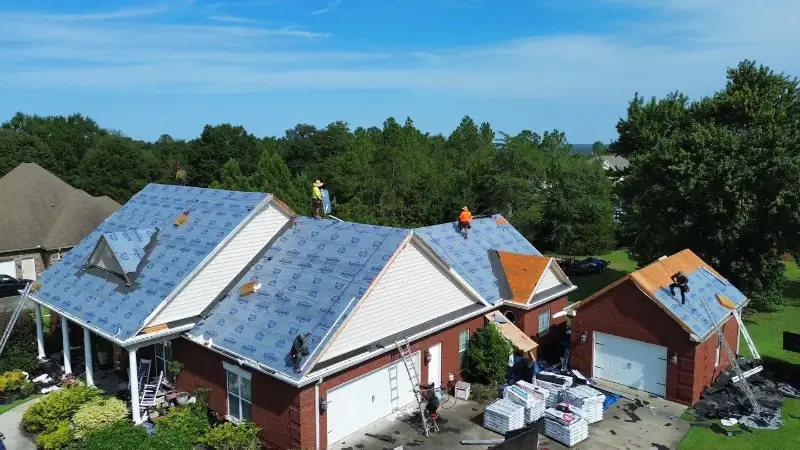
After a storm passes, a walk around the outside of the house from ground level can tell you a lot. Look for shingles that are missing, cracked, or covered in granule loss. Also check for dented or bent flashing, and any debris that may have landed on the roof. Take photos of anything you can see clearly and safely. This documentation is useful both for your own records and if you end up filing an insurance claim. The National Weather Service has additional guidance on staying safe during and after severe storms.
Not all storm damage is visible from the ground, though. Some of it does not show up as a leak until weeks later. That is usually when a professional inspection is worth arranging. Specifically, that applies whether the immediate concern is storm damage roof repair or damage that looks more like hail damage roof repair. Either way, getting an accurate picture of the roof’s condition matters more than guessing from the ground alone.
Professional Roof Repair in Conroe, TX
Everything above is meant to help you get through the next few hours as an emergency repair measure. That means protecting your home, containing the water, and avoiding anything that adds risk. None of it replaces having the actual source of the leak found and fixed. A tarp or a patch of sealant leaves some questions unanswered. It does not tell you whether the decking underneath is still sound, or whether the flashing needs to be rebuilt. It also will not tell you whether the shingles nearby are close to failing too.
If water is still finding its way in, that is worth addressing directly. The same is true if you are not sure what caused the leak in the first place. Professional roof repair in Conroe is what identifies the actual problem. It gets the issue fixed — not just covered up for another storm.
Frequently Asked Questions
Can I temporarily stop a roof leak myself?
In many cases, yes — placing containers to catch water, moving belongings out of the way, and covering a small, accessible area with a tarp can all reduce damage in the short term. What you should not do is treat any of it as a fix. It is damage control until the actual cause of the leak is identified and repaired.
How long can a roof leak be temporarily patched?
There is no fixed timeline, and that is part of the risk. A tarp or sealant might hold for a few days or a couple of weeks depending on weather and how the patch was applied, but it is not designed to last, and water can still be getting in underneath it without being obvious.
Should I put a tarp over a leaking roof?
A tarp can help if it can be placed safely — meaning dry conditions, a roof that is not too steep or storm-damaged, and someone comfortable doing the work. If any of that is not the case, professional tarping is the safer route rather than risking a fall.
Can roofing cement stop an active leak?
It can slow a small, accessible leak, but it is not built for an active or heavy leak, and it will not hold up as a long-term solution. It works best as a short-term measure on a dry surface, not as a way to avoid a proper repair.
Do I need a professional if the leak has stopped?
Usually, yes. A leak stopping does not mean the cause is gone — it might mean the rain stopped, or the temporary patch is holding for now. Without an inspection, there is no way to know if the decking, insulation, or flashing underneath sustained damage that will show up again later.